Risk assessment and quantification: How to turn uncertainty into opportunity

Risk management is at the heart of business decisions. It is a key tool that helps companies understand potential threats and navigate strategically. It provides a visual and intuitive method for identifying, analysing and prioritising risks by highlighting probabilities of occurrence and potential impacts.
Especially in dynamic or highly regulated industries, risk matrices offer decision-makers the opportunity to accurately understand their company’s risk landscape and make informed decisions when assessing risks. By systematically recording and evaluating potential risks in a matrix, companies can obtain a clear overview of risk priorities and develop appropriate risk mitigation measures. This article deals with the importance and process of creating and using risk portfolios. It discusses the advantages and highlights the challenges that can arise when assessing and managing risks in complex business environments. To overcome these challenges, risk assessments and risk matrices should be considered part of a comprehensive risk management approach.
Quantitative or qualitative: which risk assessment method is right for your company?
Risk assessment forms the backbone of an effective risk management process in companies. It helps organisations identify potential threats to their objectives and respond appropriately. At the core of risk assessment are two methodological approaches: quantitative and qualitative risk assessment methods. Each approach has specific advantages and is better suited to certain situations, depending on the nature of the risk, the available data and the objectives of the assessment.
Quantitative risk assessment methods
Quantitative risk assessment methods use numerical data to quantify the probability of occurrence and the potential impact of risks. These approaches enable detailed and objective analysis based on statistical models, financial indicators and probability calculations.
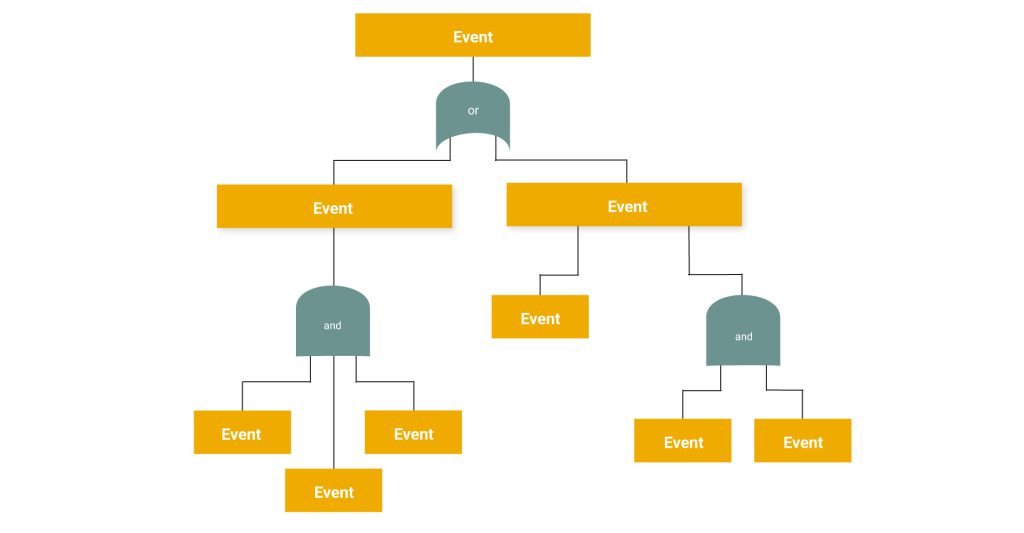
Fault tree analysis (FTA) examines the various ways in which a system can fail and calculates the probability of total failure based on the failure probabilities of the individual components. Starting with the event or fault that should not occur, this method works its way down to the root of the problem.
Monte Carlo simulation (risk simulation) uses random numbers and probability distributions to simulate the effects of risks on projects or business objectives and enables comprehensive risk quantification. Various specialist books have been written about this method, which allow for a deeper dive into the subject matter.
In Event Tree Analysis (ETA), an inductive method for analysing the consequences of errors, the sequential sequence of events that can lead to an undesirable event is identified and its probability assessed. This is done graphically in an event tree. This method makes it possible to uncover weaknesses in a protection concept and take measures to reduce risk.
Advantages of quantitative risk assessment methods
Quantitative methods are objective and allow risks to be prioritised based on their financial impact. They provide accurate and comparable results that are essential for strategic planning and decision-making.
Disadvantages of quantitative risk assessment methods
Quantitative methods require detailed and reliable data, which in some cases can be difficult to obtain or provide. In addition, these methods can be complex and time-consuming to apply and may not be able to fully reflect all aspects of a risk, particularly human factors and qualitative aspects.
Qualitative risk assessment methods
In contrast, qualitative risk assessment methods rely on the analysis of descriptions and assessments to identify and evaluate risks. Expert knowledge and experience are used to classify and prioritise risks.
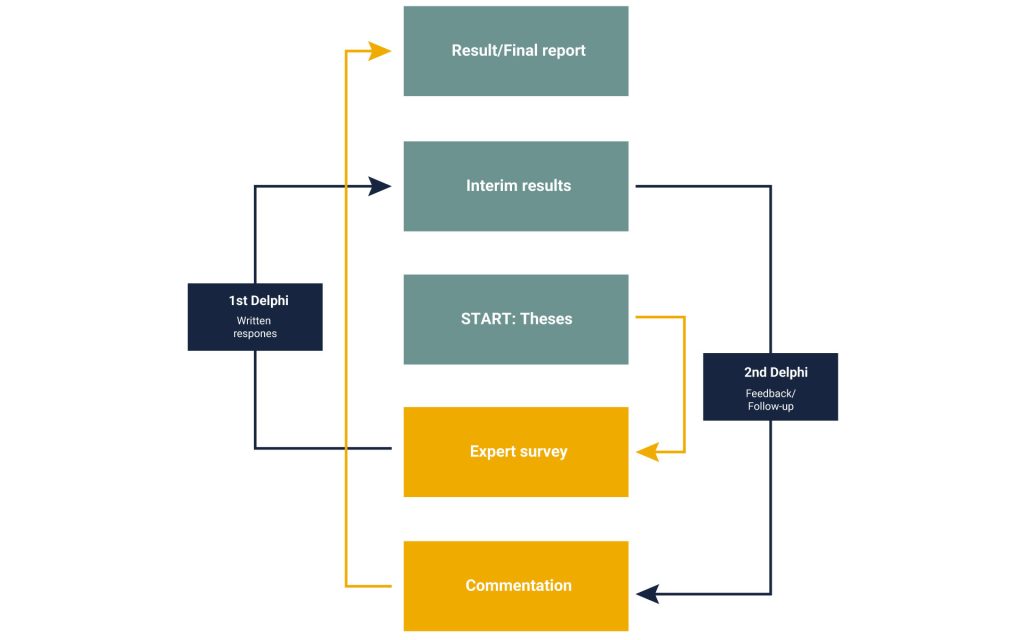
Brainstorming and the Delphi method are two qualitative methods that companies can use to identify potential risks and understand their relative significance. Brainstorming involves gathering ideas and feedback from team members or experts. The Delphi method is a structured communication method in which a panel of experts anonymously gives their opinions on risk factors and reaches a consensus.
Advantages of qualitative risk assessment methods
Qualitative methods are flexible and can be adapted to different situations. They are usually faster and less expensive than quantitative methods. They allow for the inclusion of human insights and the consideration of uncertainties and qualitative aspects of risks that are difficult to quantify.
Disadvantages of qualitative risk assessment methods
A major disadvantage is the subjectivity of the results. This depends heavily on the experience and judgement of the people involved. It is important to choose the right method. The methods make it difficult to compare and prioritise risks, as they do not provide objective criteria for quantifying probabilities or impacts.
Choosing the right method
The decision on whether to use quantitative or qualitative risk assessment methods depends on various factors. These include the type of risk, the availability of data and the specific objectives of the risk assessment. Often, a combination of both approaches is the best way to gain a comprehensive understanding of the risk landscape and make informed decisions. By leveraging the strengths of both methods, organisations can develop a robust and effective risk assessment strategy that takes into account both quantitative data and qualitative insights.
Risk management under uncertainty: methods and best practices
Addressing uncertainty, i.e. knowledge gaps, in risk assessment requires a deep approach that takes into account the complexity and dynamics of risks in modern business and technology environments. To meet these challenges, it is important to understand the causes of uncertainty and use effective methods to manage it.
Causes of uncertainty in risk management
Complex systems
The complexity of IT systems and business processes makes it considerably more difficult to identify and assess all possible risk scenarios.
Incomplete information and inadequate data
Detailed information and data are often lacking to accurately determine the probability of occurrence and potential impact of risks. New technologies, market changes or regulatory adjustments can bring new and unknown risk factors. The difficulty of collecting comprehensive and specific data makes it considerably more difficult to perform sound risk assessment and risk management.
Human judgement
Risk assessment is often dependent on subjective judgements that are influenced by individual experiences and perceptions. This leads to variability in the assessment of risks, which is difficult to standardise.
Dynamic changes
Rapid developments in IT and constant changes in the business environment make it difficult to assess risks in a stable manner over the long term. New threats can arise quickly, rendering existing risk assessments obsolete.
Dealing with uncertainty in risk management
Risk analysis tools
Modern risk analysis tools use advanced data analysis, statistical models and simulation-based approaches to make uncertainties quantifiable. Risk management software offers comprehensive functions for recording, analysing and reporting risks, enabling more informed decision-making.
Scenario analyses
Developing and evaluating different scenarios helps companies gain a better understanding of possible future scenarios and their impact on risks. Scenario analysis encourages thinking in terms of alternative possibilities and prepares organisations to respond flexibly to unforeseen events.
Expert knowledge
Consulting experts can help fill information gaps and gain deeper insight into specific risk areas. Experts from various disciplines can help reduce uncertainty in risk assessment through their specialised knowledge and experience.
Flexibility and adaptability
Agile risk management is crucial for responding to new and unexpected risks. Organisations should develop strategies that enable them to adapt quickly to changing risk landscapes.
Sensitivity analyses and simulations
These methods are important for understanding how changes in basic assumptions can influence the results of risk assessment. Sensitivity analyses help to identify the variables that have the greatest impact on risk, while simulations, such as Monte Carlo simulations, use stochastic models to provide a spectrum of possible outcomes.
Fuzzy logic
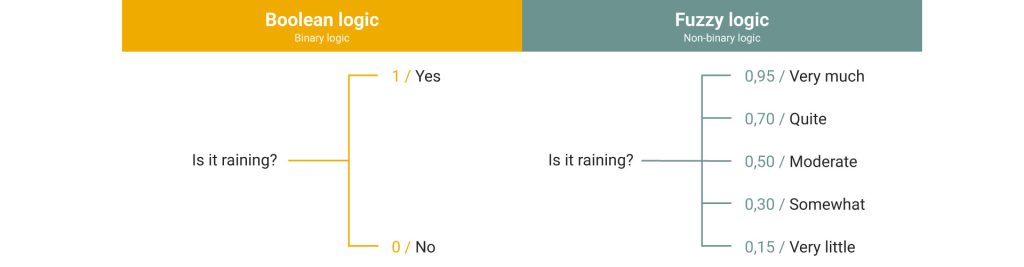
Fuzzy logic allows uncertainties to be taken into account in risk assessment through non-binary evaluations. This approach is particularly useful when precise data is lacking or the assessment of risks is unclear.
By applying these strategies and tools, companies can achieve a more robust and realistic risk assessment under conditions of uncertainty. Continuous adaptation to new findings and a flexible response to unforeseen events are crucial for effective risk management.
Challenges of risk assessment under uncertainty
Assessing risks with uncertainties presents numerous challenges that companies must overcome in order to develop effective risk management strategies. One of the biggest challenges in risk assessment with uncertainties is subjectivity. Risk assessments are often based on experience and judgement, which can lead to different interpretations and evaluations. This subjectivity makes it difficult to reach a consensus on the severity and priority of risks and impairs decision-making. This increases the risk of incorrect decisions. Another challenge is the inaccuracy of results. Due to incomplete information and the dynamic nature of risks, it is difficult to make accurate predictions about probability of occurrence and potential impact. These inaccuracies can prevent companies from taking appropriate risk management measures. Uncertainty makes it difficult to select measures that offer an optimal balance between risk reduction and resource utilisation.
Best practices for managing uncertainty in risk assessment
To overcome these challenges and ensure efficient risk assessment under uncertainty, companies should apply certain best practices.
The first step is to identify the most important uncertainties, i.e. knowledge gaps, and quantify them if possible. This helps to obtain a clearer picture of the risk situation and make informed decisions. Use different risk assessment methods. Combining quantitative and qualitative assessment methods can provide a more comprehensive understanding of the risks. While quantitative methods help to measure and prioritise risks, qualitative approaches can provide deeper insights into the nature of the risks and possible mitigation strategies.
Consider uncertainties in your decision-making. When prioritising risks and developing risk management strategies, the identified uncertainties should be explicitly taken into account. Risks should be continuously monitored and assessed to keep track of the risk landscape and associated uncertainties, and to respond quickly to changing requirements and conditions and adjust your risk management strategies accordingly.
Transparency is an important aspect of risk assessment. It is important that assumptions, methods and results are communicated clearly and comprehensively in order to promote the confidence of all stakeholders. By applying these best practices, companies can effectively overcome challenges in risk assessment under uncertainty and establish a solid foundation for risk management.
Scenario analyses for effective risk quantification
Scenario analysis is an important tool in risk management, especially when quantifying IT risks. It allows companies to simulate a variety of potential risk scenarios and assess their possible impact on IT systems and infrastructure in detail. Organisations can strengthen their resilience and develop effective risk mitigation measures by systematically developing and analysing different scenarios.
Development of scenarios
Identification of relevant risk factors and selection of scenarios
The process begins with the identification of relevant risk factors that could affect IT systems and infrastructure. Brainstorming sessions, detailed risk analyses and consultation with experts can be used for this purpose. Relevant scenarios that could pose a significant threat to the company are then selected based on these risk factors.
Definition of scenario parameters
Specific parameters are defined for each selected scenario. These include the probability of occurrence, the time and duration of the event, and the expected impact on IT systems and infrastructure. These parameters are crucial for the subsequent quantification of the impact.
Conducting scenario analyses
Quantification of impacts
The potential impact of each scenario is calculated using simulation models or other quantitative methods. This analysis makes it possible to assess the financial, operational and security-related consequences of various risk scenarios.
Prioritisation of risks and development of measures
Based on the quantification of the impact, risks can be prioritised and specific risk mitigation measures developed. These measures can range from technical solutions to organisational changes in order to effectively address the identified risks.
Evaluation of results from scenario analyses
Identification of vulnerabilities and improvement of risk assessment
The results of scenario analyses provide valuable insights into vulnerabilities within the IT infrastructure and systems. These insights enable improved risk assessment and contribute to the optimisation of risk management processes and controls.
Development and use of risk indicators
The findings from scenario analyses can be used to develop risk indicators. These enable early detection of risks and significantly improve decision-making regarding IT risks.
Advantages and challenges of scenario analyses
Although scenario analyses offer advantages such as risk quantification, increased resilience and improved risk management, they also present challenges. The complexity and time required to develop and perform analyses, as well as the uncertainty of the results and the need for detailed data, are factors that must be taken into account. It is important to minimise subjectivity in the selection and evaluation of scenarios to avoid bias. Scenario analyses are an indispensable tool in risk management. They enable companies to comprehensively simulate and quantify potential IT risks and develop effective countermeasures. Through the systematic application of scenario analyses, companies can significantly improve their IT security and resilience. This makes them better prepared for unforeseen events.
The importance of risk matrices for visual risk assessment
The use of risk matrices for visual assessment is an indispensable tool in the risk management process of companies. These tools offer an intuitive and effective method of presenting the complexity of risks in an easily understandable form. They are used in various industries and are particularly valuable for companies operating in a dynamic or regulated environment. the risk matrices enable decision-makers to better navigate their company’s risk landscape and make informed decisions.
Creating and structuring a risk matrix
Creating a risk matrix requires a comprehensive understanding of the specific risks to which a company is exposed. The identified risks should then be structured in a matrix to provide a clear overview.
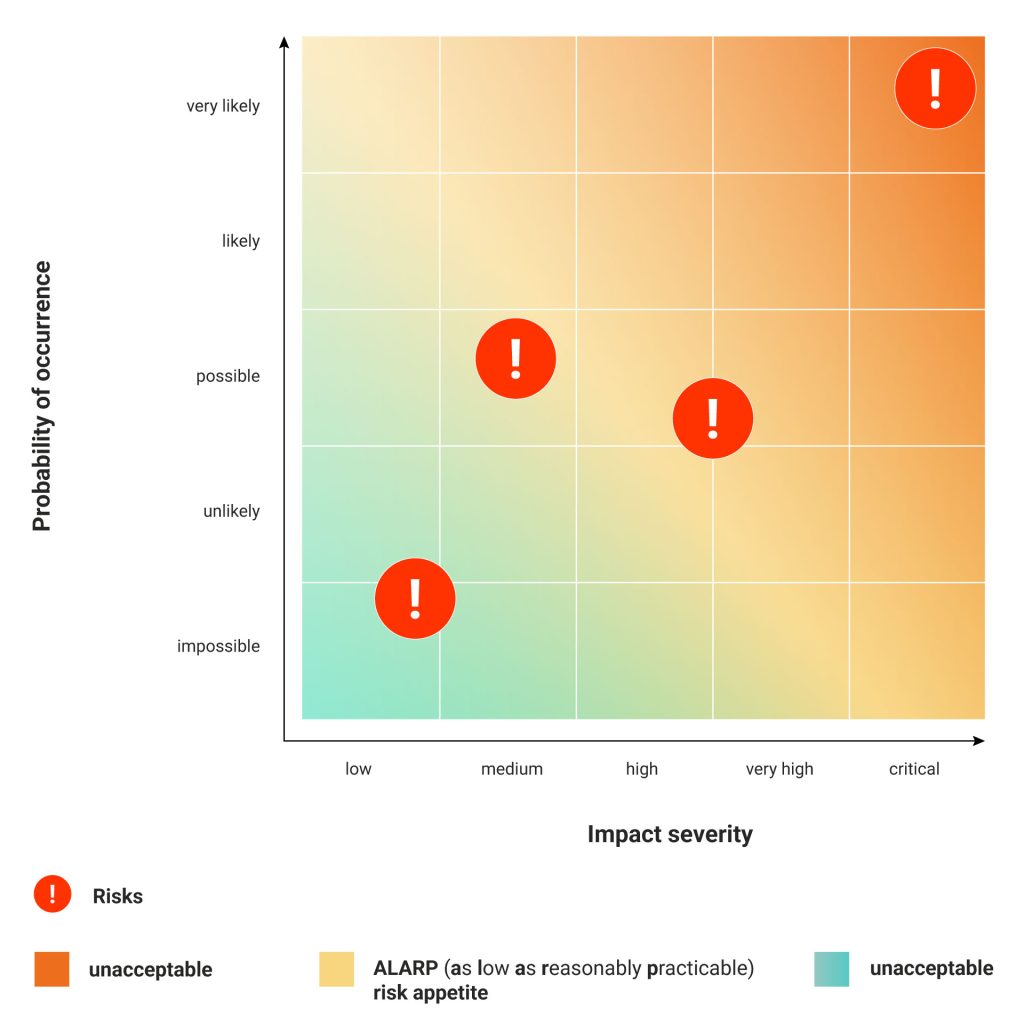
As part of the upstream analysis of the relevant risks, the two main dimensions of the risk matrix are defined. The probability and potential impact of risks are typically rated on a scale of 1 to 5. Here, 1 stands for a very low probability or very low impact, and 5 for a very high probability or very high impact. A uniform scale is crucial for the consistency and comparability of the assessments.
The assessed risks are positioned in the matrix, with each axis representing one of the dimensions. Visualisation using colours and symbols helps to differentiate between risk levels and makes the matrix an intuitive communication tool. The risk matrix not only facilitates the prioritisation of risks, but also their discussion within the company and with external stakeholders.
Advantages and challenges of risk matrices
The risk matrix is primarily used to prioritise risks. Companies can quickly identify which risks require the most attention and where action is needed. This enables more efficient resource allocation and targeted risk mitigation. Another advantage is improved communication. The visual nature of the risk matrix facilitates the communication of complex risk information. This is particularly relevant when discussing risk management strategies with management, specialist departments or external partners. Another key area of application is the continuous monitoring and assessment of risks. The risk matrix provides a basis for regularly reviewing the risk situation and adapting it to new developments or findings.
Although risk matrices offer advantages, their limitations must be recognised. The assessment of risks is subjective and the matrix can become confusing when dealing with many risks. In addition, due to the dynamic nature of the business world, the risk matrix must be updated regularly to provide relevant and accurate information. To address these challenges, it is important to view risk matrices as part of a broader risk management process. Combining them with other assessment tools and techniques can help to create a more complete picture of the risk situation and improve decision-making.
Mastering risk assessment: How to improve your decision-making with risk assessments and risk matrices
As you have seen, risk matrices are a valuable tool in risk management that help organisations identify, prioritise and effectively communicate risks. Through continuous application and adaptation, organisations can improve their risk management strategies and strengthen their resilience to uncertainty and challenges.
Effective risk management requires flexibility, transparency and continuous improvement. Companies should use quantitative and qualitative risk assessment methods and cultivate a culture of risk awareness to strengthen their resilience. For organisations looking to optimise their risk management processes, it is crucial to use proven methods and tools.
Contact
Are you looking for an experienced and reliable IT partner?
We offer customised solutions to meet your needs – from consulting, development and integration to operation.
You are currently viewing a placeholder content from HubSpot. To access the actual content, click the button below. Please note that doing so will share data with third-party providers.
More InformationYou are currently viewing a placeholder content from Hubspot Meetings. To access the actual content, click the button below. Please note that doing so will share data with third-party providers.
More Information